Posts

Mindful Monday- Circle Time- is your circle hip or square?
Image
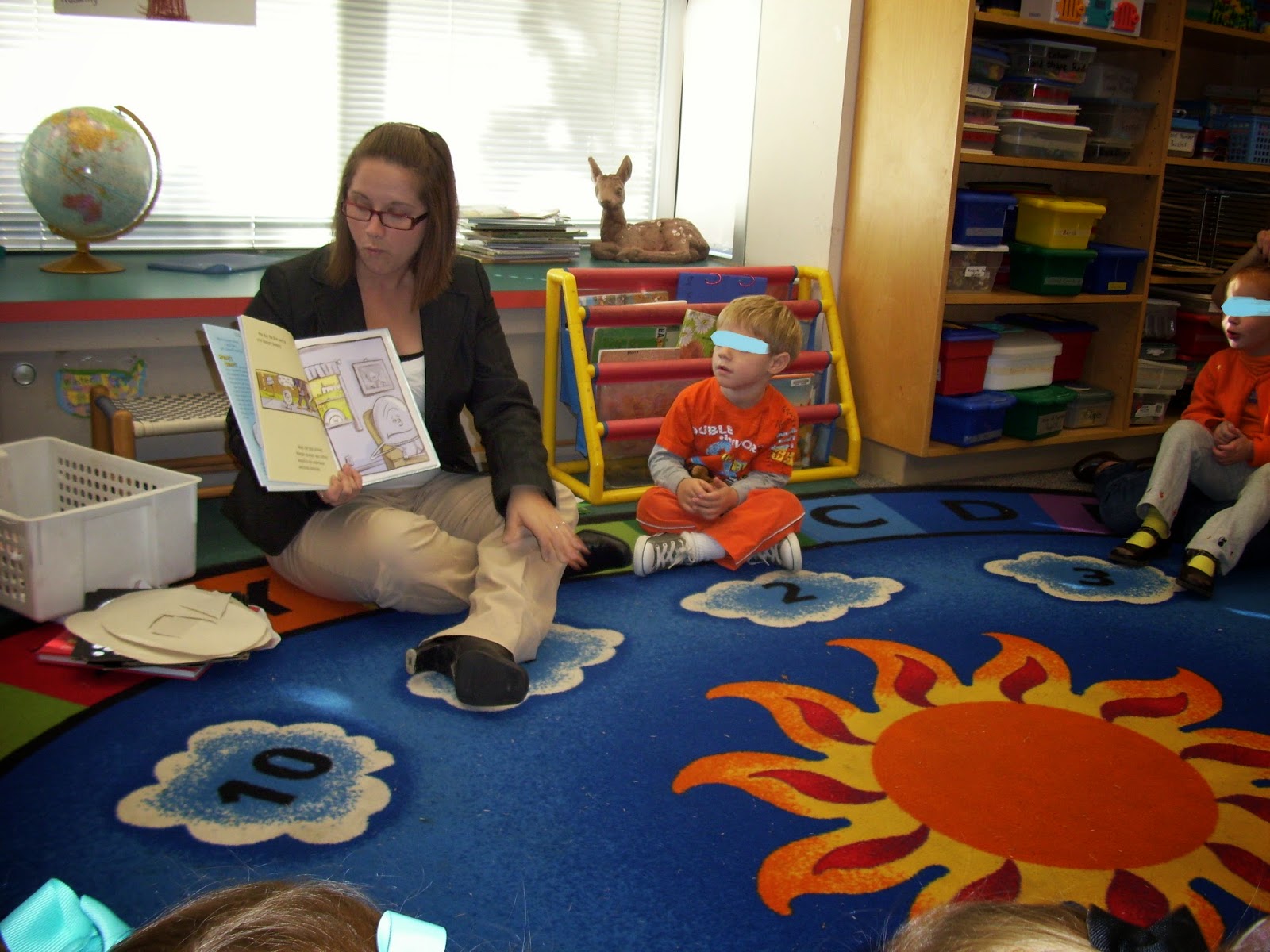
Mindful Monday This is where each Monday we are mindful of our pedagogy, slowly adjusting our lessons to match our theories. There are some things that are universal among early childhood classrooms.  One of those elements is circle time.  While there is no real hard and fast rules for conducting circle time, there are several guidelines that could be helpful.   1. The first thing to think about is how long should your circle time be.  If you are teaching infants or toddlers your circle time will look quite different from a preschool or kindergarten circle time.  For the youngest children you want to let them come and go as they want.  You may only be reading a book or singing a song for your circle time at this age.  If they lose interest that is ok!  As they age you can add a little time to your circle time.  Three's should be able to make it through a book, a song, and a game. Remember to include LOTS of movement, inclu...

Fill It Up Friday- Challenging Behavior in Young Children

Image
Fill it up Friday Each Friday we will look at an article to fill up on the whys of teaching. This is one of my favorite books EVER.  Seriously!  If you haven't heard of it yet please, please, please check it out! Anyone who knows me in real life knows that I frequently read books on child behavior, especially difficult behaviors.  I've noticed that the better I managed my classroom the more the children are able to learn, so I focus on behavior first.  The authors do an amazing job looking at various factors that influences a child's behavior and what we as adults can do to help mitigate those factors. The authors break the book up into manageable pieces that reference the different aspects that influence behavior and how to work around with them such as the social context, physical space, and the inclusive setting. By far my favorite part of the book is the inclusion of the functional assessment behavior chart.  This is also known as the ABC chart....

Thursday Thoughts- Engagement

Image
Thursday Thoughts This is where we will collaborate on classroom issues.   "I'm doing a presentation about the connection between classroom engagement and behavior management when dealing with my students here in China (age 1-6). What are some strategies or resources you would recommend?" -Tre T. (Shenzhen, China)   Obviously I will be attacking this from an American cultural perspective since I am an American living in the states. That being said there are many developmental factors that are relatively stable. The next tough thing to tackle in your question is the age range.  Whew!  Ages 1 to 6 really encompasses a huge developmental range so we will break it up as we look at engagement and behavior management.    Infants and Toddlers When it comes to this age group I always get a mental image of herding cats.  Ever tried to do that?  It is tough ! You want them to have the freedom to leave the activity when their attention w...

Wednesday Words- Number Sense

Image
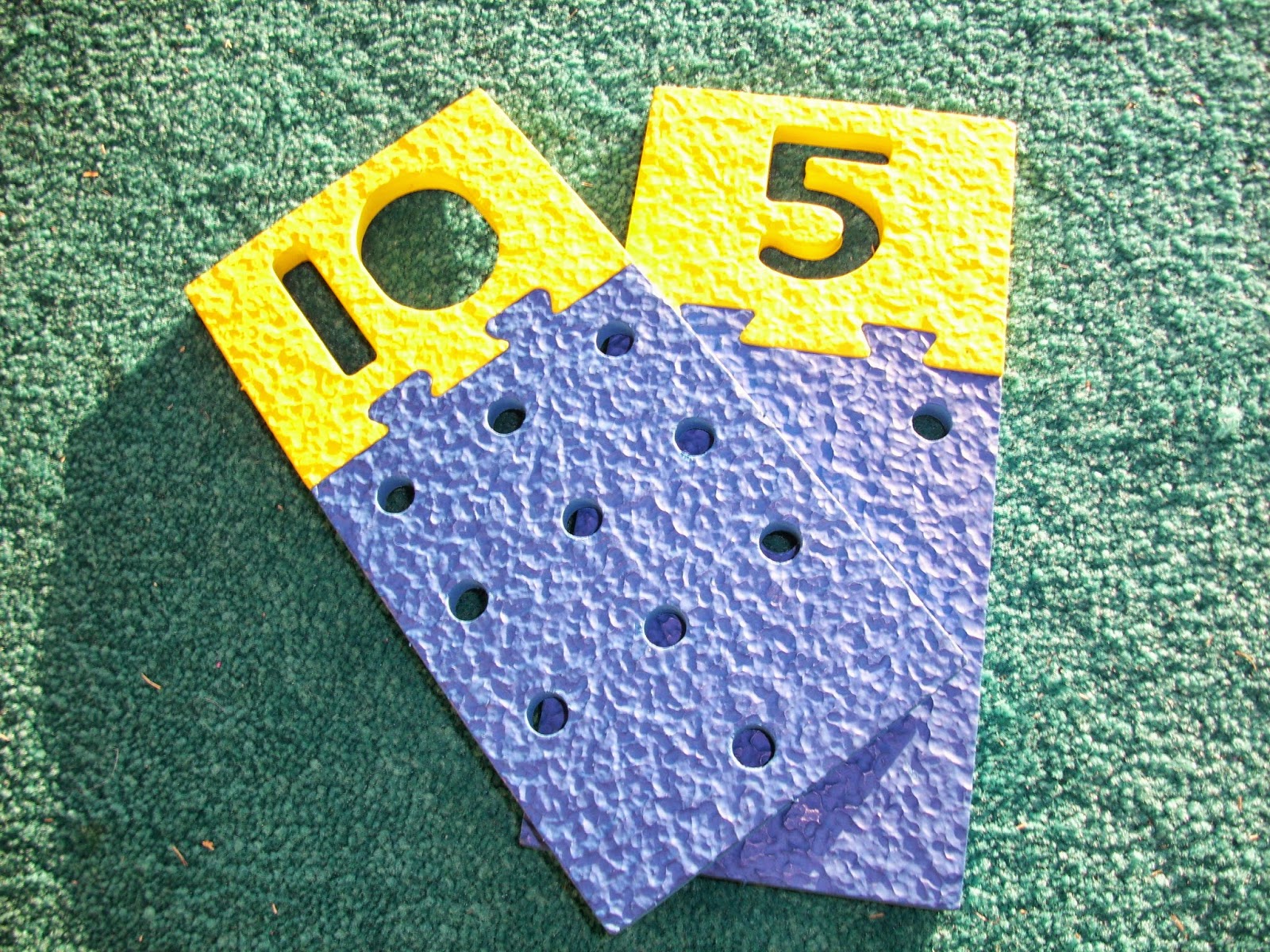
Wednesday Words We will look at the words that define us. Number sense. Does that term make sense to you? Enough with the word play already, lets define! Number sense simply refers to the ability to understand and use numbers.  This is not a topic that is taught in one lesson, instead think of it as an ongoing process that is taught directly and indirectly.  When children are young and we ask them to pass out the appropriate number of snack materials we are working on number sense.  When we ask them to identify numbers we are working on number sense.  When we ask them to show us a set identifying a specific number we are working on number sense. When we ask them what digits make up a larger number we are working on number sense. Do you see a trend here? The idea is that when children are exposed to and allowed to explore numbers and quantities from a young age (I'm talking infants here!), they develop the ability to manipulate numbers on a deeper s...

Time Out Tuesday- Gardening Update

Image
Time-Out Tuesday Each Tuesday we will take time out of the classroom to learn about each other. Just a little update on my garden.  Wow has it been workin' it!  It looks like I am going to have more cucumbers than I will know what to do with.  Do you have any recipes? My squash and tomatoes are really coming in too.  A couple of my tomatoes are turning red.  Yay!   The peppers are doing well too.  I've already picked several and it looks like a few more will be ready in about a week. I'm looking forward to the day when we can use a real backyard.  Our poor neighbors will think farmers have moved in! 

Mindful Monday- Group Work

Image
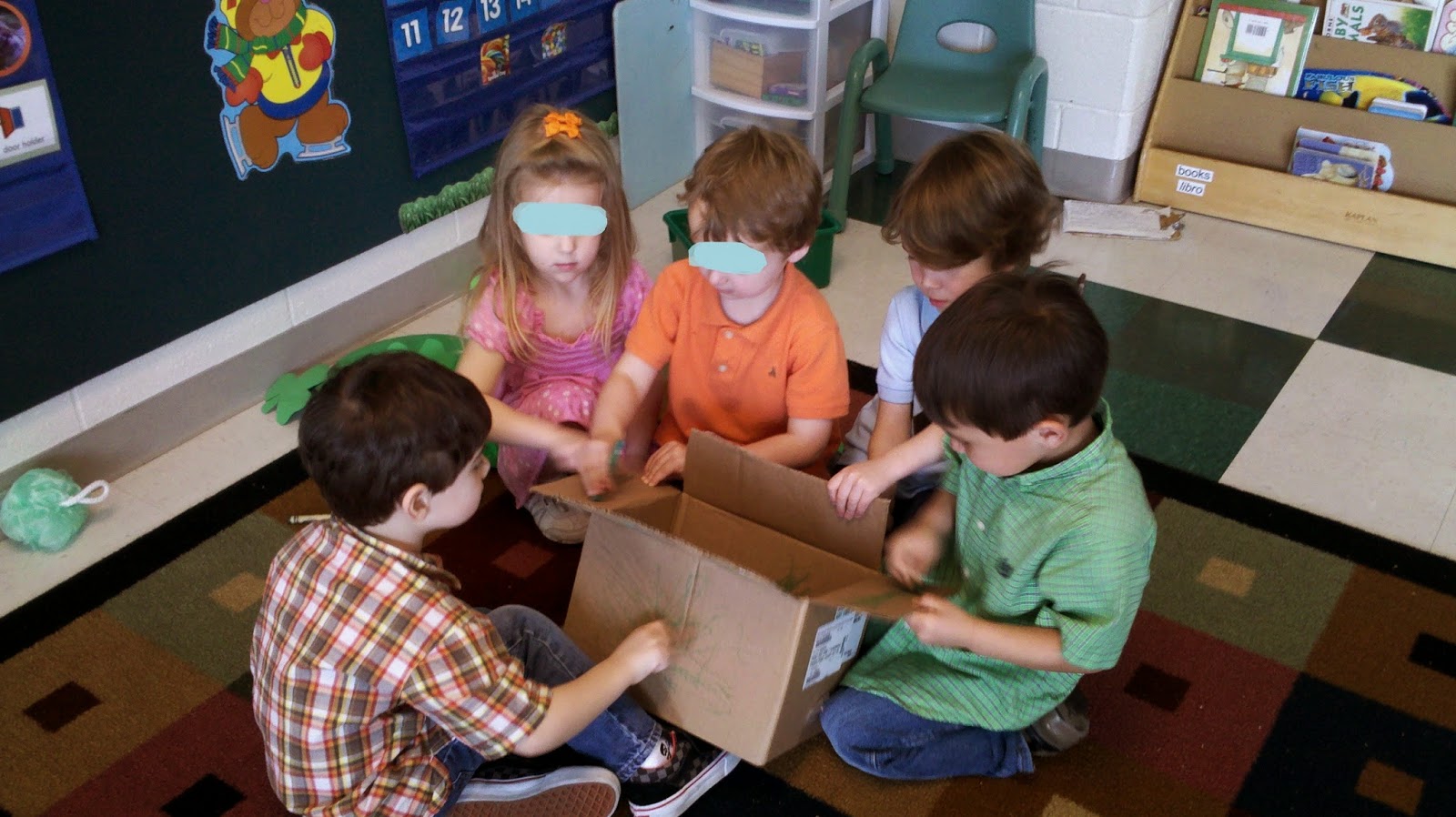
Mindful Monday This is where each Monday we are mindful of our pedagogy, slowly adjusting our lessons to match our theories. Group work.  Man that statement can elicit many different responses based on what you endured in school. As the uber control freak I hated group projects.  The other people couldn't possibly do the work "right" so I would do it all.  Or most of it and let them edit.  I had to let them do something right? I've also been part of groups where the others simply refused to do any work (obviously this was after I realized teachers didn't want my work, they wanted our work). I like trying to get my students on the group work bandwagon early.  I think it helps the ones who lean more towards control to learn to trust their peers.  It also helps those that tend toward allowing others to do all the work to learn to participate.  My favorite thing about group work for super young children is building their communic...

Thursday Thoughts- Forgiveness

Image
Thursday Thoughts This is where we will collaborate on classroom issues. A few weeks ago we talked a bit about apologies.  If you haven't read that post you can find it here.  We talked about how it is important to teach children to move toward giving apologies, but not forcing them to do so. Now that you've practiced that with your own kids (classroom or personal, or heck that kid at Walmart that needed a talking to), you have most likely hit the next stumbling block- how to get the "victim" to accept an apology. Just as forcing a child to apologize doesn't teach empathy, forcing a child to "feel better" now that they have received an apology doesn't teach forgiveness.  After having the "aggressor" attempt to make the child feel better I always ask the "victim" if they feel better.  If they don't I ask one of two questions: "What would make you feel better" or "Can I give you a hug?".  Sometimes a ...